
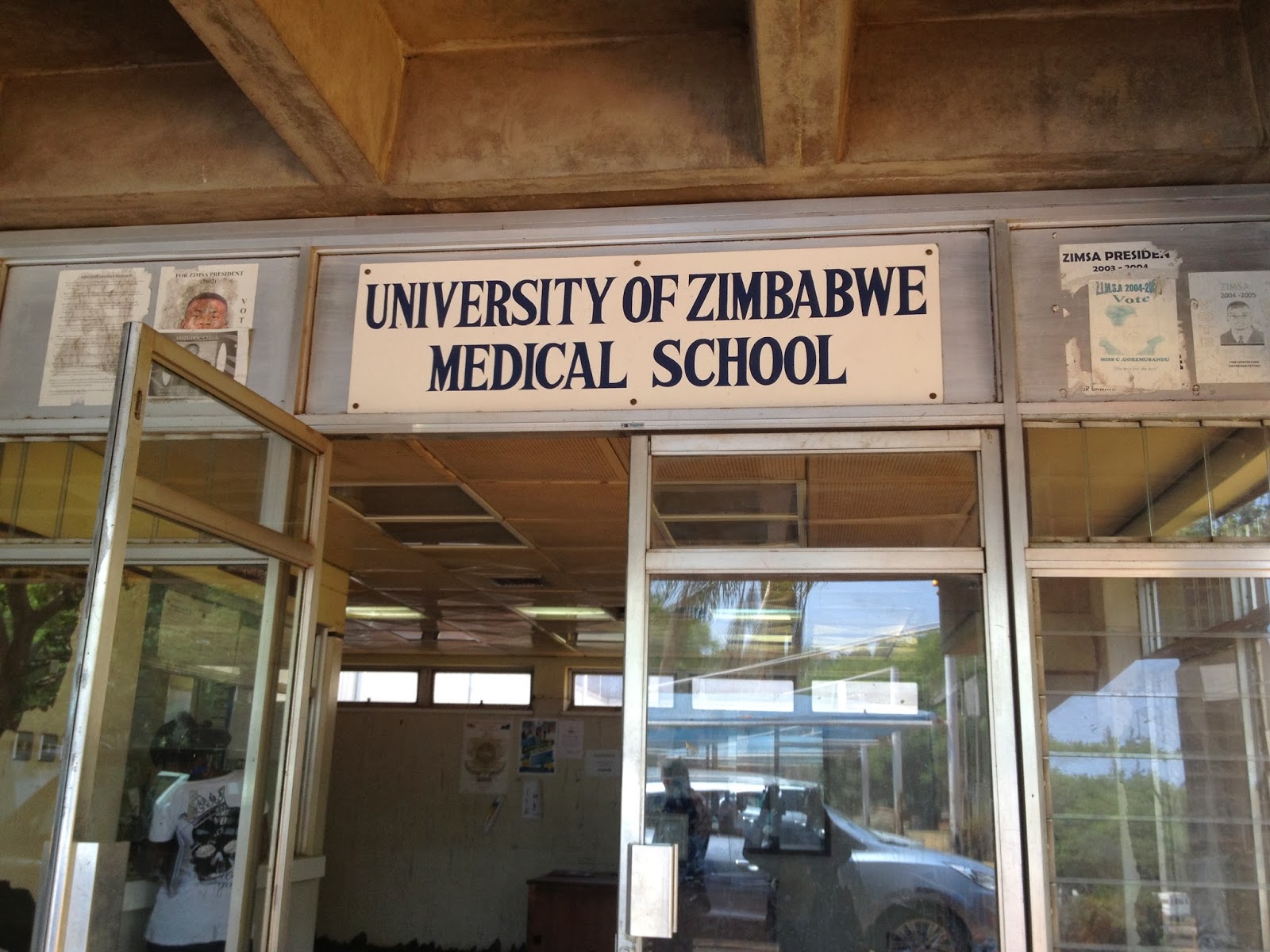
Zimbabwe risks isolating itself from existing mutual recognition and relationships with the global and regional medical community through extending the period of medical studies to seven years.
By Kudakwashe Pembere
This comes as universities offering the medical degree and students are grappling to come to terms with this directive from the regulator of universities and colleges, the Zimbabwe Council of Higher Education (ZIMCHE).
Heaping two more college years on medical students in essence would see them being offered completion certificates after seven years against the globally accepted five. Resultantly, this will lower the quality of students produced at medical schools such as UZ, Midlands State University and the National University of Science and Technology.
The College of Health Sciences is one of the oldest medical schools in the SADC region.
A circular written by UZCHS Director Mr Christopher Samkange states that this move would correspondingly make it a pariah state.
“That being the case, currently, respective training institutions are rightly the custodians of the academic regulations governing undergraduate training and certify successful completion by issuing the degree certificate and transcript. The residency training on the other hand, is mainly governed by the Health Professions Authority under the auspices of the Medical and Dental Practitioners Council of Zimbabwe with input from the training institutions (academic and health institutions). This also applies to other paramedical training programmes that carry an internship component.
“In other words, we are totally disrupting current mutual recognition and relationships with the medical community in the region and the world as a whole. Yet the “external medical school” remains a necessary source of medical graduates, both Entry level and Specialists for our health service. The doctors we export are a source of significant foreign currency remittances and provide opportunities for our trainees to have exposure through attachments. No health service can exist on internal sources of advancement alone,” he said.
Mr Samkange said current registration on the Medical Registrar as a doctor follows the following universal pathway as laid down by the World Health Organisation
“The current MB ChB degree programme offered by the University of Zimbabwe is a five year degree programme at the end of which the successful candidates graduate and are given a certificate as doctors,” said Mr Samkange.
Upon completion of their studies according to global standard practice will undergo a two year graduate internship program.
“At graduation, the current MDPCZ regulations require the graduate to undergo a two year internship divided into one year as a Junior Resident Medical Officer (JRMO) when they cover 6 months of adult medicine and 6 months of adult surgery followed, in order, by 12 months as a Senior Resident Medical Officer (SRMO) when they will cover 4 months of Paediatrics, 4 months of Obstetrics and Gynaecology and a final 4 months where they split into two groups and one does Psychiatry and the other Anaesthetics and Critical Care medicine,” said Mr Samkange.
He said the extension of medical school years was offbeat.
“Zimbabwe will be the first to go this unorthodox route to put it politely On qualification with the MB ChB, graduates become doctors and MDPCZ registers them as such. This justifies them seeing patients, examining them, making pre-visional diagnoses in Central (or Provincial) Hospitals, initiating treatment and monitoring the progress of the patients under the supervision of registered medical practitioners at middle or senior level,” said Mr Samkange.
Mr Samkange added that the unconformity would see them not being able to issue death certificates.
“They are authorized by their registration to issue death certificates. How will our graduates be comparable to graduates from other medical schools? Whilst graduates from other schools will be conferred with degrees upon completion of 5 year programmes and considered as doctors undertaking internship, our graduates after the same period will not be doctors but “graduate trainees”?
“What will the explanation of this discrepancy be: that they are inadequately trained in five years to be called doctors? What is the implication for those trained outside Zimbabwe and return home upon graduation to undertake internship in Zimbabwe? Will they be told that in fact, in Zimbabwe they are not doctors even though they will have graduated from their institutions as doctors? What happens to the student who completes the five years of training but opts to do internship in another country? Will they go as a student who is still in training?” he queried.
According to the international norms , the Junior Resident Medical Officers and Senior Resident Medical Officers variably referred to as internship/residency/postgraduate trainee refers to a qualified medical doctor/dentist who practices medicine in a hospital under the direct/indirect supervision of a senior clinician registered in a specific specialty.
“Completion of such training, invariably in almost all settings is designed to certify unrestricted independent medical practice and is not necessarily a continuation of the University undergraduate academic training programme. That being the case, currently, respective training institutions are rightly the custodians of the academic regulations governing undergraduate training and certify successful completion by issuing the degree certificate and transcript. The residency training on the other hand, is mainly governed by the Health Professions Authority under the auspices of the Medical and Dental Practitioners Council of Zimbabwe with input from the training institutions (academic and health institutions). This also applies to other paramedical training programmes that carry an internship component,” said Mr Samkange.
Mr Samkange also said the shift would see duplication of roles within the two ministries in the scramble to manage medical interns.
This move came as a result of the admission of failure by the Health Services Board in solving the perennial grievances of junior doctors on graduate traineeship at Government’s central hospitals.
““Perennially, there have been collective job actions by the junior doctors, specifically by the interns working in the Central Hospitals. The Health Services Board (HSB), their primary employer, admits that they have failed to resolve the differences between the demands made by each successive group of interns and their capacity to respond and HSB has requested that the management of interns be moved from them to the Ministry of Higher and Tertiary Education (MOHTE). 1.2 They are huge implications of such a move and this paper addresses the impact that could be expected to arise, and the costs to be born,” he said adding that , “The MOHTE has directed that the University of Zimbabwe College of Health Sciences draw up regulations that would move the management of the medical Internship from the Ministry of Health (MoH&CC) to the Ministry of Higher and Tertiary Education, Science and Technology Development (MOHTE) These regulations would reflect the medical degree programme (MB ChB) at UZ (and all other Zimbabwean universities) becoming a seven year programme. Naturally, one hopes that these regulations will be allowed to pass scrutiny in the University processes at Faculty and Academic Committee level and Natural Justice will allow them to apply to new streams only and existing streams by voluntary assent.”
ZIMCHE’s chief executive officer Professor Kuzvinetsa Nzvimbo said as empowered by law to effect these changes deemed it fit to extend number of medical school years as well as shifting the management of graduate trainees from the Ministry of Health and Childcare to the Ministry of Higher and Tertiary Education Science and Technology.


